🚀📅 Day 44 DevOps Challenge -Demystifying Infrastructure as Code (IaC) and Configuration Management

Passionate software engineering student | DevOps enthusiast | Seeking innovation and excellence in software engineering! 👨💻
In today's fast-paced digital landscape, businesses require agility, scalability, and efficiency in managing their IT infrastructure. Traditional manual approaches to managing and configuring infrastructure can be time-consuming, error-prone, and difficult to scale. This is where Infrastructure as Code (IaC) and Configuration Management come into play, revolutionizing the way organizations manage, deploy, and scale their infrastructure. Let's delve into understanding what IaC and Configuration Management are and how they contribute to modern IT operations, including the key differences between them.
Understanding Infrastructure as Code (IaC)
Infrastructure as Code (IaC) is a paradigm that involves managing and provisioning computing infrastructure using machine-readable definition files or code, rather than manual processes. In essence, IaC allows you to describe and automate the provisioning and management of infrastructure components, such as servers, networks, databases, and more, using code.
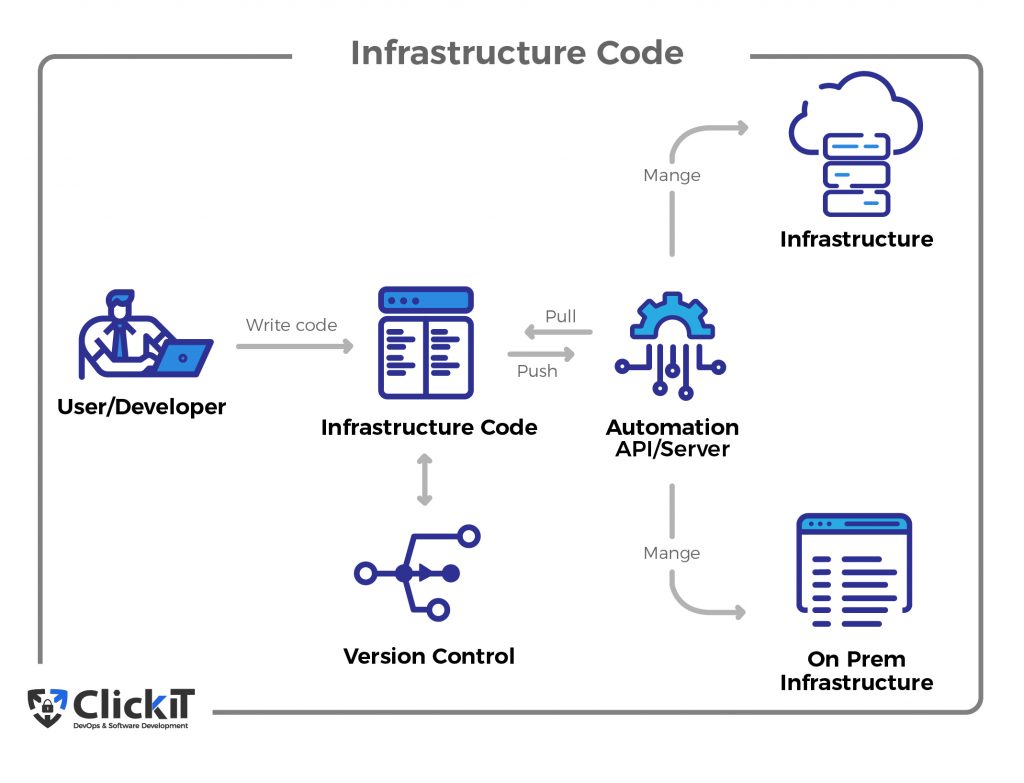
Key Benefits of IaC:
Consistency and Repeatability 🔄: IaC ensures that your infrastructure is consistently and reliably provisioned, reducing the likelihood of errors and minimizing variations across environments.
Efficiency ⚙️: Automating infrastructure provisioning and management streamlines processes, making them faster, more efficient, and less error-prone.
Scalability 📈: IaC facilitates the rapid scaling of infrastructure, allowing organizations to easily adapt to changing demands and growth.
Version Control 📝: Treating infrastructure as code means you can use version control systems to track changes, roll back to previous versions, and collaborate effectively with your team.
Collaboration and Knowledge Sharing 🤝: IaC enables teams to work collaboratively on infrastructure code, fostering knowledge sharing and improving overall team productivity.
Understanding Configuration Management
Configuration Management involves defining, tracking, and controlling the configurations of software and infrastructure components in a consistent and automated way. It ensures that systems are configured and maintained in a desired state, enforcing compliance with organizational policies and requirements.

Key Benefits of Configuration Management:
Consistency 🔄: Configuration Management tools ensure that configurations across systems are consistent, reducing configuration drift and enhancing system stability.
Automation ⚙️: Automating configuration changes simplifies and accelerates the deployment of applications and updates, enhancing efficiency and reducing manual errors.
Auditing and Compliance 🕵️: Configuration Management provides detailed audit trails, enabling organizations to track changes and ensure compliance with regulatory and security standards.
Rapid Recovery ⏩: In the event of failures or issues, Configuration Management tools allow for rapid recovery by applying known, tested configurations to restore systems to a desired state.
Bringing IaC and Configuration Management Together
IaC and Configuration Management are often used in tandem to create a powerful, automated infrastructure management approach.
Provisioning with IaC: IaC is utilized to provision the initial infrastructure, defining the base components and configurations required for an application or system.
Configuration Management for Ongoing Management: Configuration Management tools then take over to maintain and manage the ongoing configurations, ensuring that the infrastructure stays in the desired state over time.
Key Differences Between IaC and Configuration Management
Approach:
IaC focuses on automating the provisioning and management of infrastructure using code, defining the infrastructure's desired state and allowing for consistent and repeatable deployments.
Configuration Management, on the other hand, concentrates on automating and maintaining configurations in a desired state for software and infrastructure components.
Scope:
IaC covers the entire spectrum of infrastructure provisioning and orchestration, including servers, networks, databases, and more.
Configuration Management typically deals with configuring and managing the software and applications running on the infrastructure.
Level of Abstraction:
IaC operates at a higher level of abstraction, defining the infrastructure's desired end state and allowing the system to determine how to achieve that state.
Configuration Management operates at a lower level, focusing on specific configurations and settings for software and infrastructure components.

Key Tools in IaC and Configuration Management
Tools for Infrastructure as Code (IaC):
Terraform 🌍: A widely used IaC tool that allows you to define and provision infrastructure using declarative configuration files.
CloudFormation ☁️: An IaC service provided by AWS, enabling you to model and provision AWS resources using templates.
Ansible 🤖: Though known for Configuration Management, Ansible is also used for IaC, automating the provisioning and configuration of infrastructure.
Tools for Configuration Management:
Puppet 🎭: A Configuration Management tool known for its declarative language and rich ecosystem for managing infrastructure.
Chef 🍴: Another robust Configuration Management tool that automates the deployment, configuration, and management of infrastructure.
Ansible 🤖: Besides IaC, Ansible is widely used for Configuration Management due to its simplicity and versatility.

By combining the strengths of both paradigms and understanding their differences, organizations can achieve a highly efficient and automated approach to infrastructure management throughout the entire lifecycle of an application or system. Embracing these practices and leveraging the right tools can significantly benefit organizations seeking to thrive in the ever-evolving world of technology. 🚀


